5 Ways Moving Companies Can Reduce Worker Compensation Claims
Worker compensation claims can devastate a moving company's bottom line. A single back injury claim averages $40,000 to $80,000 in direct costs, not counting the indirect impact on insurance premiums, team morale, and operational capacity.
The good news? Most moving related injuries are preventable. Here are five proven strategies to protect your workers and your business.
1. Invest in Motorized Stair Climbing Equipment
The number one cause of injuries in the moving industry is manual lifting, especially on stairs. When your crew is muscling a 300 pound refrigerator up to a third floor walkup, injury is just one misstep away.
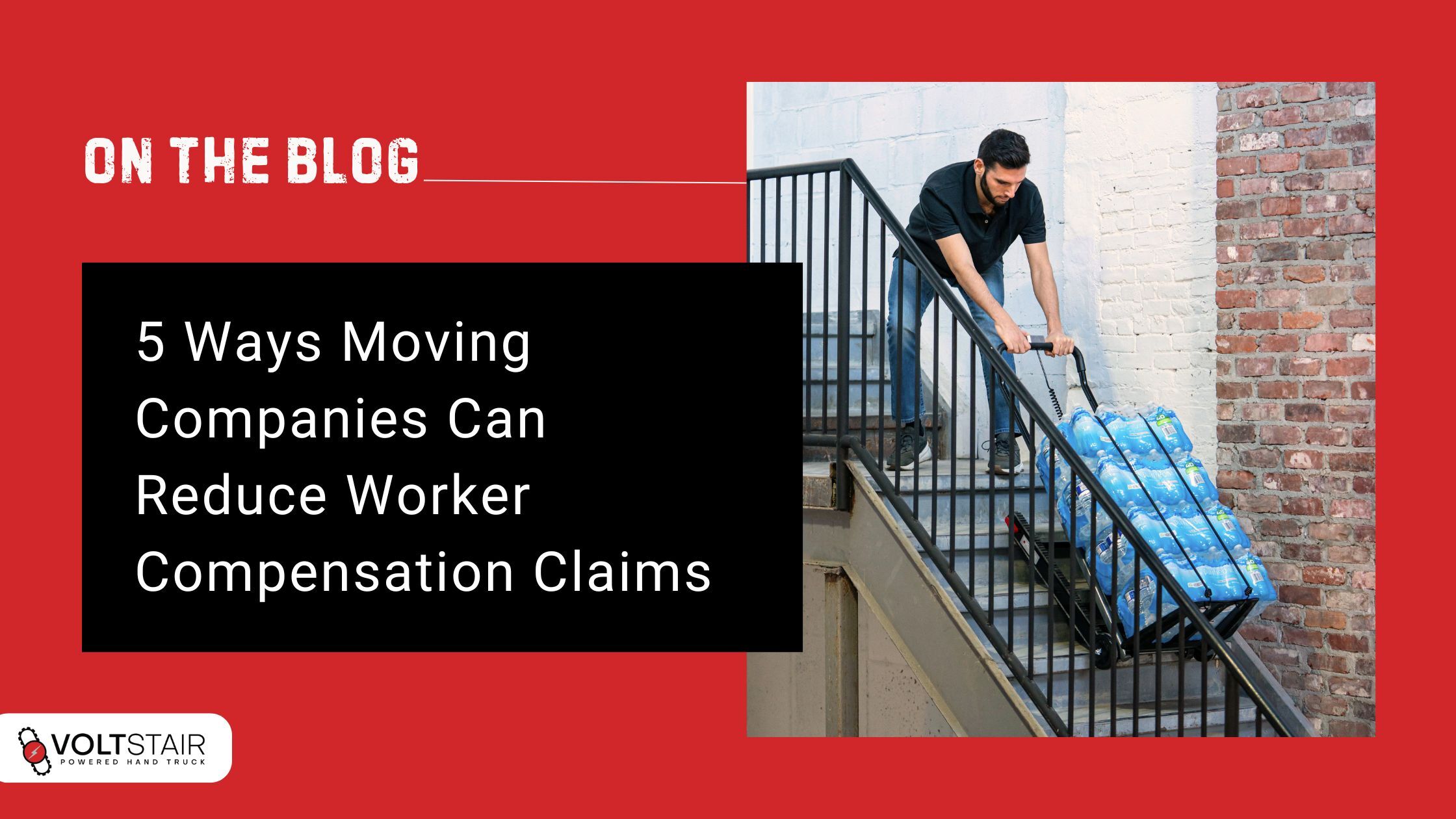
Motorized stair climbing equipment like the Voltstair eliminates the heavy lifting. Instead of two or three workers straining under the weight, one operator guides the motorized unit up the stairs while the motor does the work. The equipment handles heavy loads safely and efficiently.
The impact: Companies that adopt motorized equipment report 60% to 80% reductions in lifting related injuries. One moving company in Pennsylvania eliminated stair related injury claims entirely after equipping their crews with Voltstair units.
Cost consideration: With Voltstair, the investment typically pays for itself after preventing just one injury claim. The labor savings alone often cover the cost within weeks.
2. Implement Mandatory Proper Lifting Training
Even with the best equipment, your crew needs to know proper lifting techniques for situations where manual lifting is unavoidable.
Essential training elements: Bend at the knees, not the waist. Keep the load close to your body. Avoid twisting while carrying weight. Know when to ask for help or use equipment. Recognize early signs of strain or fatigue.
Make it stick: Don't just do one training session during onboarding. Schedule quarterly refresher courses. Have experienced movers mentor new hires. Create a culture where asking for help or choosing equipment over brute force is encouraged, not seen as weakness.
Document everything: Keep detailed records of who attended training and when. This documentation protects you legally and ensures accountability.
3. Enforce Team Lifting Protocols and Weight Limits
Create clear policies about when team lifting is required versus when equipment must be used. Many injuries happen because workers try to handle loads solo that should require help or equipment.
Sample guidelines:
Items under 50 pounds: Solo carry acceptable
Items 50 to 150 pounds: Two person team required
Items over 150 pounds or any stairs: Motorized equipment required
Awkward or unbalanced items: Equipment regardless of weight
The key is enforcement: Rules don't prevent injuries if supervisors look the other way when workers ignore them. Make compliance part of performance reviews. Celebrate crews that follow protocols, and address those who don't.
Reality check: In the rush to complete jobs quickly, corners get cut. Build your schedules with enough time that crews don't feel pressure to take dangerous shortcuts.
4. Provide Proper Safety Equipment and Maintain It
Beyond motorized equipment, your teams need appropriate personal protective gear that's actually in good condition.
Essential safety equipment: Back support belts for manual lifting situations. Heavy duty work gloves with grip. Steel toe boots. Furniture moving straps and dollies. Stair rails and handholds when available. Knee pads for floor work.
Maintenance matters: A dolly with a wobbly wheel or a hand truck with worn straps becomes a liability instead of a safety tool. Inspect equipment weekly. Replace worn items immediately. Budget for regular equipment upgrades.
Make it easy: Keep backup equipment on every truck. If safety gear is inconvenient to access, workers won't use it. Store gloves, belts, and other frequently used items where crew members can grab them instantly.
5. Create a Culture of Safety Over Speed
This is the hardest change to implement but potentially the most impactful. Many moving companies inadvertently incentivize risk taking by prioritizing speed over safety.
Red flags in your culture: Praising crews for finishing impossibly fast without asking how they did it. Scheduling back to back jobs with no buffer time. Pressuring teams to skip breaks on long jobs. Treating injury reports as annoyances rather than learning opportunities. Rewarding "toughness" over smart work practices.
Building a better culture: Acknowledge that safe moves take slightly longer and price accordingly. Celebrate zero injury months, not just speed records. When incidents happen, focus on "what can we learn" not "who screwed up." Give crews authority to refuse unsafe work without fear of retaliation. Share near miss reports and discuss prevention strategies.
Lead by example: If owners and managers cut corners or dismiss safety concerns, crews will too. When leadership treats safety as non negotiable, everyone else follows.
The Business Case for Prevention
Every dollar spent on injury prevention saves you multiple dollars in avoided claims. Consider this breakdown:
Prevention costs (annual for small moving company):
Motorized stair climber: $1,500 gradually over 5 years = $300/year
Safety equipment and maintenance: $500/year
Training programs: $400/year
Total: $1,200/year
Potential costs of just one injury:
Medical expenses and worker compensation: $40,000 to $80,000
Increased insurance premiums (3 year impact): $15,000+
Lost productivity and replacement labor: $10,000
Total: $65,000 to $105,000
The math isn't subtle. Prevention is dramatically cheaper than dealing with injuries after they occur.
Beyond the Numbers
Worker compensation claims cost more than money. Injured employees face pain, recovery time, and sometimes permanent limitations. Their families deal with financial stress and uncertainty. Your business loses experienced team members, either temporarily or permanently.
Other crew members watch what happens when someone gets hurt. They wonder if they're next. Morale suffers. Your best workers might start looking at competitors who take safety more seriously.
Meanwhile, your reputation takes a hit. Word spreads in the industry. Recruiting becomes harder. Customers notice when crews seem overworked or when injuries delay their moves.
Prevention isn't just about protecting your insurance rates. It's about building a sustainable business that attracts and retains good people.
Take Action Today
You don't have to implement everything at once. Pick one area to focus on this month. Maybe it's finally investing in that motorized equipment you've been considering. Maybe it's scheduling a comprehensive safety training session. Maybe it's having honest conversations with your team about the pressure they feel to work unsafely.
Whatever you choose, start now. Every day you wait is another day of unnecessary risk.
Get the Right Equipment
If manual stair lifting is costing your company in injuries and inefficiency, it's time to explore motorized solutions. The Voltstair line comes with a 7 day money back guarantee.
Try it on your toughest jobs. Calculate your real world time and labor savings. See how much easier the work becomes for your crew. If it doesn't deliver results, return it for a full refund.
Your team could be working safer by the end of this week.


